Why is Jodhpur painted blue? The answer intertwines caste, climate, and creativity in a tale as old as the city itself. From Brahmin households marking their identity with indigo wash to the cool desert breeze that the blue walls invite, discover the fascinating story behind the Blue City's iconic colour palette.
The origin of Jodhpur's distinctive blue hue is steeped in tradition and practicality. Historically, the Brahmin community — the priestly caste in Hindu society — painted their houses blue to distinguish their residences from those of other communities. The indigo dye, derived from the native Indigofera plant that thrives in Rajasthan's arid climate, was both a symbol of spiritual purity and a marker of social identity. Over time, this practice spread beyond the Brahmin quarter, and the entire old city began to embrace the blue wash as a collective expression of Jodhpur's unique character.
Beyond its social symbolism, the blue colour served a deeply practical purpose. Indigo possesses natural insect-repellent properties, protecting homes from mosquitoes and termites that plague desert settlements. More importantly, blue walls reflect the harsh Rajasthani sun rather than absorbing its heat, keeping interiors significantly cooler during the scorching summer months when temperatures regularly exceed 45 degrees Celsius. In a city where survival depended on adapting to extreme conditions, the blue wash was not merely aesthetic — it was an ingenious ecological strategy.
The process of creating the blue wash itself is an art form passed down through generations. The indigo dye is prepared by fermenting the leaves of the Indigofera plant in water for several days, then treating the resulting paste with lime and other natural agents. This traditional dye-making process, known as "neel khadna," was once a thriving cottage industry in Jodhpur, with families specialising in the cultivation and processing of indigo. Though synthetic alternatives have largely replaced natural indigo in modern times, the essence of the tradition lives on in every freshly painted wall.
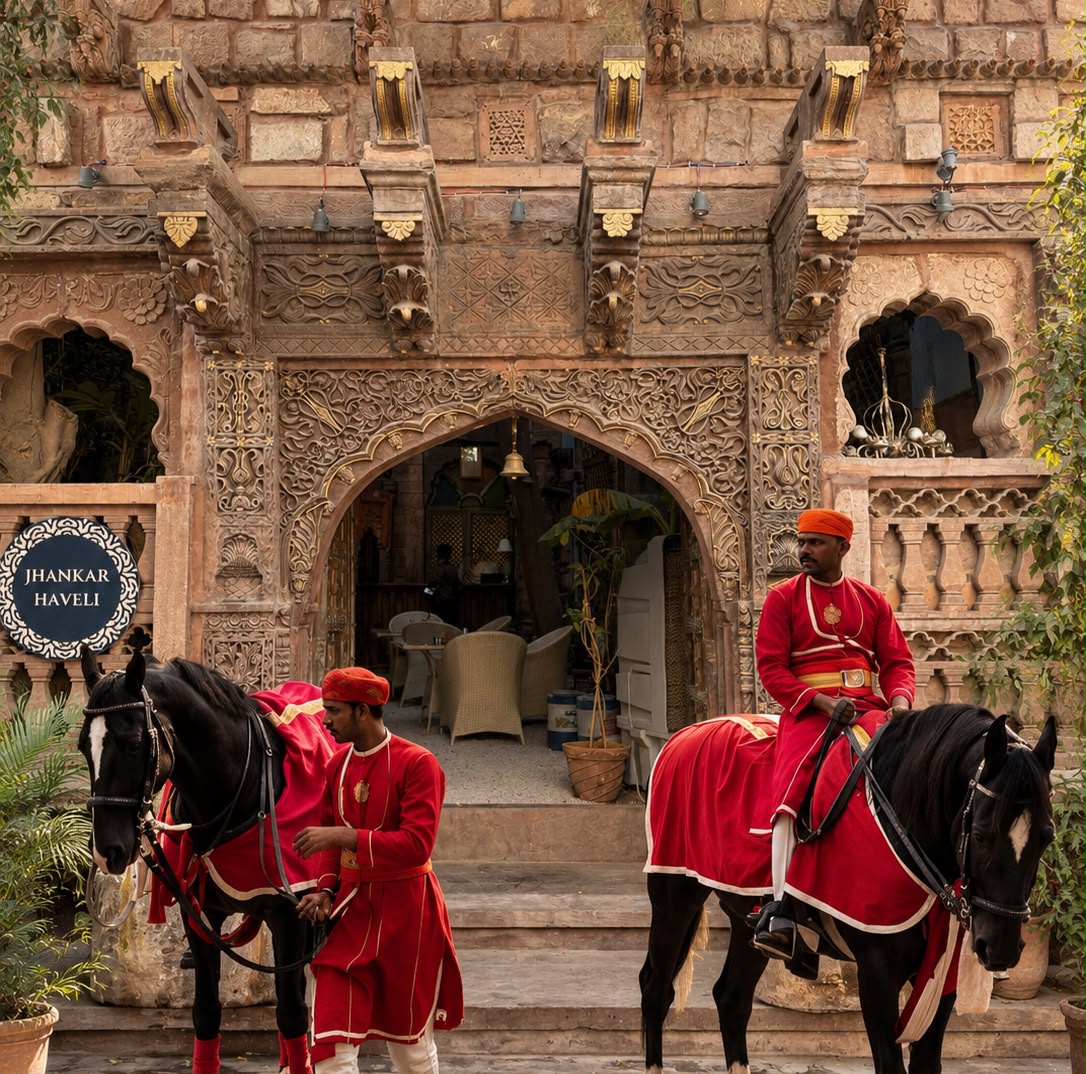
Standing on the rooftop of Jhankar Haveli, gazing across the sea of blue that stretches from the Clock Tower to the foothills of Mehrangarh, one cannot help but feel the poetry of this colour. It is not merely blue — it is a hundred shades of blue, from the deep cobalt of newly painted walls to the soft cerulean of decades-old facades weathered by sun and sand. Each shade tells a different story, each wall holds a different memory, and together they form the most iconic visual identity of any Indian city.